
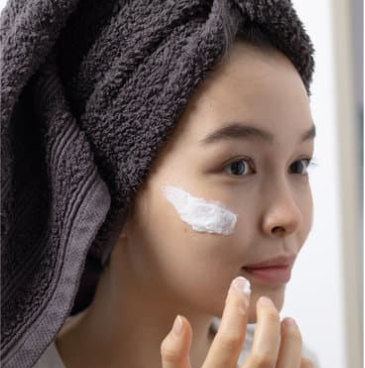
Over the past few months, I’ve noticed something while working with many different skin types.
The clients who see the best results are not always the ones spending the most money.
They are usually the most consistent.
Skin Changes More Slowly Than You Think
One of the most common questions I hear is:
“How many treatments will it take?”
But just as skin does not become dry, sensitive, or acne-prone overnight, it does not recover overnight either.
Dry skin, sensitive skin, and acne-prone skin often take months or even years to develop.
Recovery takes time too.
A Few Hours at the Clinic, Hundreds of Hours at Home
Most people spend only a few hours each month receiving professional treatments.
The rest of the time is spent at home.
That means your daily habits have a bigger impact on your skin than any single treatment.
Even the best treatment can only do so much if your skin is not cared for between visits.
Better Skin Is Not Created by Expensive Treatments
Good products and advanced technology can certainly help.
However, the clients who consistently improve often share a few simple habits:
- They wear sunscreen regularly.
- They follow a home care routine that suits their skin.
- They stay consistent with their treatment plan.
- They give their skin time to improve.
There is no secret.
People who stick to the basics tend to see the best long-term results.
Skin Needs the Right Support
Just as our bodies need different nutrients to stay healthy, our skin needs different support depending on its condition.
Dry skin may need hydration and barrier repair.
Sensitive skin may need calming and protection.
Acne-prone skin often needs balance rather than stronger products.
The goal is not to follow trends.
The goal is to understand what your skin needs right now.
Why Does AURA Focus on Home Care?
The answer is simple.
Your skin does not improve only during treatments.
Professional care helps guide the process.
Home care helps maintain it.
Both are important.
Without proper home care, it becomes much harder to achieve lasting results.
The AURA Approach
At AURA, we do not promise dramatic overnight changes.
Instead, we focus on helping clients improve their skin in a healthy and sustainable way.
That is why we value consistency, realistic home care, and long-term skin health over expensive one-time treatments.
Healthy skin is not built in a day.
It is built through consistent care and healthy habits.
Healthy Skin. Healthy Beauty.
“Many lash salons use LED instead of traditional glue now, right?”
A client recently asked me this question.
LED lash extensions have become popular because they can reduce treatment time and improve retention.
But it made me wonder.
At AURA, we always protect our clients’ eyes with protective goggles when using LED devices during skin treatments.
Not because LED is dangerous, but because the eyes are one of the most sensitive parts of the body.
So why is LED light used so close to the eyes during lash treatments?
And is it really safe?
I decided to look into the available information.
Isn’t It the Same Technology Used in Nail Salons?
One of the most common arguments for LED lash extensions is:
“Nail salons use the same technology.”
That is true.
Light-curing technology has been used in the nail industry for many years.
So many people naturally think:
“If it’s okay for nails, why wouldn’t it be okay for eyelashes?”
Nails and Eyelashes Are Different
Nail treatments use light on the hands.
Lash treatments use light very close to the eyes.
| Category | Nails | Eyelashes |
|---|---|---|
| Treatment Area | Hands | Near the eyes |
| Main Exposure | Skin | Eye area |
| Distance | Relatively far | Very close |
Because of this difference, the safety data from nail treatments cannot automatically be applied to lash treatments.
The Answer Is Surprisingly Simple
LED lash extensions use light to cure the adhesive.
The issue is that there are still very few large, independent studies evaluating the long-term eye safety of this treatment.
Based on the information currently available, the most accurate conclusion is:
“It has not been proven to be harmful, but it has not been proven to be completely safe either.”
Conclusion
One thing is clear.
There is a lot of marketing about the benefits and convenience of LED lash extensions, but there is still limited long-term data supporting eye safety.
For that reason, AURA chooses methods that have been used for a longer period of time rather than simply choosing what is faster.
This article was written based on publicly available safety information and photobiological safety standards.